

World Bank Scholarships Program
The World Bank scholarship program is a truly valuable opportunity for candidates from developing nations. The Development Economics Vice Presidency (DEC) of the World Bank gives grants to students and youthful analysts, contributing to the World Bank's mission of forming vacant energetic methods to dimensions improvement and information sharing within the world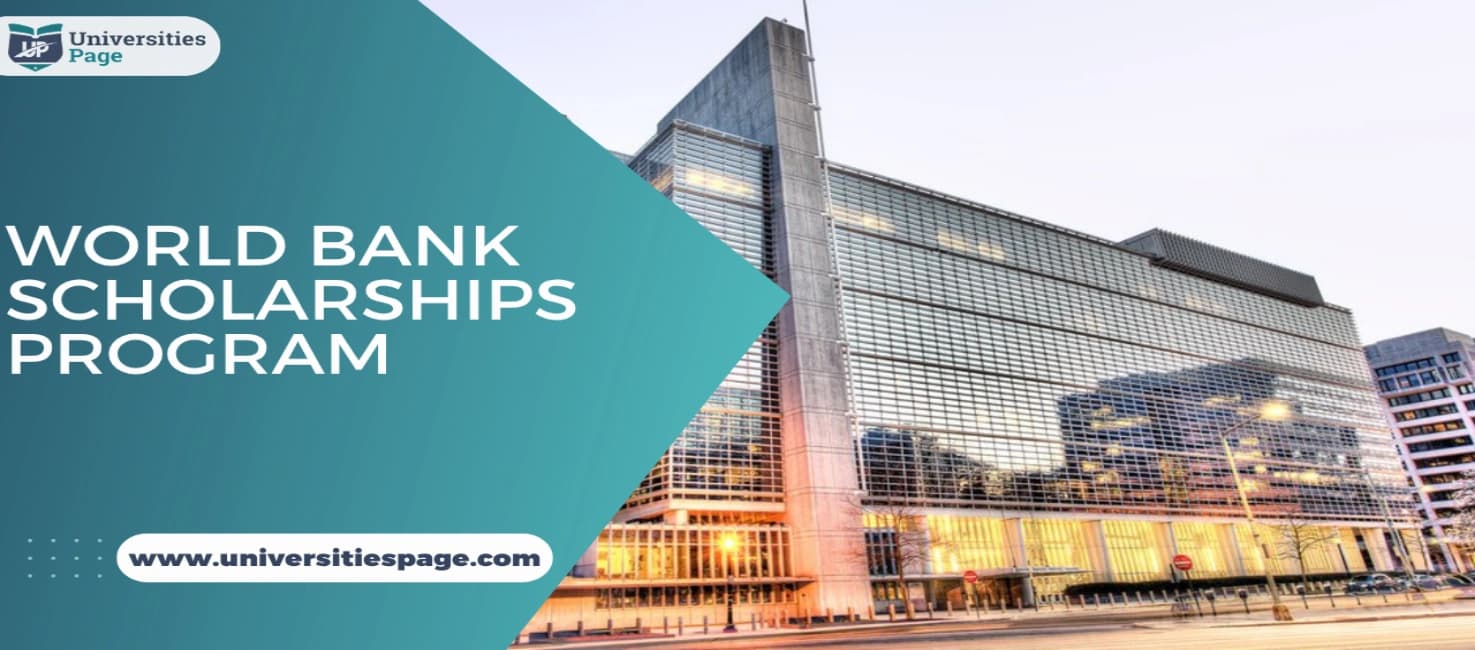
This program started in 1982. The World Bank scholarship program is a truly valuable opportunity for candidates from developing nations. The Development Economics Vice Presidency (DEC) of the World Bank gives grants to students and youthful analysts, contributing to the World Bank's mission of forming vacant energetic methods to dimensions improvement and information sharing within the world. The DEC's grant programs have created a pool of over 6,000 well-trained and knowledgeable improvement experts and scholars, fluctuated their nations and emphatically affected future eras.
It is an authoritative component of the World Bank's endeavors to advance financial growth and shared thriving through contributing to instruction, building, and developing human assets. The World Bank has propelled its moment demand for applications for its 2024-2025 scholastic year grant program. The World Bank Grant Program for the 2024-2025 scholarly year allows students everywhere in the world to seek master's degrees in a diverse range of programs that are related to development. In association with Japan, this program encourages students from different countries to be part of the nation to consider colleges within the U.S., Europe, and Japan.
|
Scholarship Summary |
|
|
Country |
Developing countries |
|
Institution(s): |
various universities collaborate with World Bank |
|
Study level: |
Master’s, PhD |
|
Funding type |
fully funded/ partially funded/ research grants |
|
Host country |
candidate’s choice |
Program types
It has some active and inactive programs. However, the programs that are available as inactive may open anytime in the coming year. Then, the students can apply for those programs. Therefore, students should check from time to time for the availability of their desired programs. According to recent data from 2025, there are 3 active programs and one inactive program. Currently active Programs are:
- World bank graduate and Joint Japan grant program
- Robert S. McNamara Partnerships Program
- Africa fellowship program
1. Joint Japan and World Bank Graduate Grant Program
It is open to people of producing nations with important proficient involvement and a heritage of supporting their states advancement endeavors which are applying to a graduate level program in a development-relevant course. Subject to accessible subsidizing, it gives grants for master's discipline in 24 colleges in Europe, Africa, the U.S., and Japan in main varieties of improvement, reckoning financial approach administration, charge arrangement, and framework management.
Selection criteria for JJ/WBGSP
- Keeping the grants divided between the gender
- Providing scholarships to students with restricted financial
aid that is accessible for master's international studies.
- Keeping an affordable range of geographical grant allocation
- uncommon conditions or troubles in accessing work background knowledge and other steps of application
JJ/WBGSP scholarship benefits
This type of scholarship gives the following benefits
- Air journey in economy class through the beginning of your
study course and after that the scholarship duration finishes, between your
native nation and the host institute. Furthermore, Scholars will $510 for
every round-trip air travel.
- University offered tuition fees and health insurance
- Covers living, books, and food monthly, while the wage
differs based on the host state.
JJ/WBGSP scholarship disadvantages
This program does not offer extracurricular programs, visa
application expenses, educational tools like computers, language training g not
given, and other costs like internships, trips, seminars, and research.
To fit on the academic criteria of WBGSP/JJ Partaking Programs, the student preparation is prepared in two processes:
Application Window#1
Window 1 usually opens from mid-January to late February 2025. These are the rough dates, the exact dates announced on the opening of the scholarship. JJWBGSP contributing projects 2023-2025 for the application window 1
- Birmingham university (MSc Security, development and
conflict)
- California-Berkeley university (master's in development
practice)
- Johns Hopkins (Master of Public Health)
- Wisconsin-Madison university (Educational policy program)
Application Window #2
Window 2 will open from late Walk to late May 2025. The announcement of the exact dates will be around May. JJWBGSP Sharing Programs 2023-2025 for the application window 2
- University of Yokohama National (Infrastructure management)
- University of Australian National (graduation in resources
economics and environmental, climate change, etc.)
- University Of Tsukuba (graduate program in economics and
public policy)
- Erasmus University-HIS (MSc in housing, urban management,
innovation and transformation, etc.)
- Sussex university (MSc climate change M.A. environment,
Policy and development, M.A. Food, growth, and Policy, etc.)
- Harvard University (graduation in public administration)
- University of Keio (master's in policy and taxation
management)
- London School Of Economics (MSc development management,
development studies, global health policy, etc.)
- University of Stanford (master's in international policy)
- Hong Kong university (graduation in urban design)
- IHE Delft Institute for Water Education (MSc in sustainable
development and water)
- National Graduate Institute for Policy Studies (tax program
of the public finance)
- Saitama University (international graduate program in civil
and environmental engineering)
- University of SOAS (MSc economics, and MSc development
economics)
- Leeds university (Master of Public Health), MSc Water
Sanitation and Health Engineering, MSc Sustainable Cities, etc.)
- University Of Oxford (Master of Public Policy, MSc in
Refugees and forces migration studies)
- University Of Tokyo (Master of Public Policy, international
program, international course on Agriculture progress studies)
- Clermont-Auvergne University (graduation in Economic Policy Management)
2. Robert S. McNamara Partnerships Program
This program supports younger scholars studying development-relevant subjects from allowed states. PhD students are eligible for this partnership program. This program also offers five to ten months funding to international students.
3. Africa fellowship program
This program gives funding support to PhD level fields relevant to growth for African candidates. It is valid to African states natives who are recent worker by a progress organization.
Inactive Program
Japan Indonesia Presidential Grant Program (JIPS)
It is mandatory to go to your home country after completing the degree. It is for the betterment of your home country and its social and international development. The candidates must have to serve their country for a specific period. This duration depends on the degree program you have chosen and the host country from where the students study.
Scholarship amount
There are three types, and for every type, a different number of grants are are available. JJ/WBGSP typically covers tuition fees, accommodation, travel tickets, etc. The total amount is usually $30,000 per year. (RSMFP) A stipend is given to the students at around $2,000 per month for up to 12 consecutive months, and it also covers the research expenses. Lastly, the YPP for professionals, not for the candidates, gives grants to young professionals in their early careers.
Benefits of World Bank scholarships
The advantages of this scholarships given below:
- Tuition cost
- Health insurance
- On campus living facility
- Travel coverage of 520 USD
- Monthly stipend depends on the host country
- Return ticket around the native country and host institute
Departments to study
These fields are available for the students to get higher
studies in:
- Finance and innovation
- Equity and poverty reduction
- global leadership
- Health, nutrition, and population
- Climate change
- Environmental management and development
- Social, urban, rural, and resilience
- Social protection and job
- Water and sustainable development (water, food, energy
track)
- Energy and extractive
- Governance
- Infrastructure
- Macroeconomics, investment, and trade,
- Development in a context of fragility and violence
- shared prosperity
- Water sanitation and health engineering
- Public policy
- Arts
- Global health management
- Public Administration
- Development studies
- Food security and sustainable food system
- Urban housing and land justice
- Public health
- Food and Agriculture
- Taxation policy and management
- Civil and environmental engineering
- Economics
- Education
- Natural and environmental resources
- Refugee and forced migration studies
- Art in Policy Economics 4
- Systemic risk
Scholarship Coverage
The following benefits are given to the students from the World Bank:
- Air ticket between the host country and home country
- A USD 500 travel allowance (for every trip)
- Tuition fee
- Health insurance
- Accommodation (that is available on campus)
- Monthly allowance (varies for different countries)
Eligibility criteria
To become eligible for the World Bank scholarship, students
must be able to fulfill the given requirements to get selected from this: The
World Bank provides scholarships for specific countries
- Dual citizenship holders are not allowed
- An undergraduate degree obtained by the student a minimum of
three years before the application time limit.
- A student who is a worker of the World Bank or a neighboring
relative is not eligible.
- Students who have previously applied for the scholarship and
declined it are not eligible.
- Students who avail of the scholarship before and withdraw it
without finishing the duration are not eligible to get it again.
- Students must have at least three years of paid work related
to development. An exception to this basis only applies to nationals of
developing countries.
- Medically fit
Required documents
There are documents required for this scholarship:
- One application form (it should include applicants all
agreements and terms and conditions be filled)
- Two recommendation letters
- Bachelor’s degree/diploma
- CV
- Admission letter
- Documents must be translated into English (if not in English)
- Medical certificate
- Identification proofs
Language Criteria
Proof of English proficiency, such as the TOEFL, IELTS, etc., is mandatory. However, the score differs for every university according to their admission requirements.
How to Apply for the World Bank Fellowship Program?
- Determine your eligibility
- Choose an eligible program
- Go to the official website
- Complete the application form. It usually includes academic
transcripts and diplomas, letters of recommendation, a CV, and a research
paper.
- Please don't use a cell phone to apply; use a computer
because their portal is specifically designed for computers.
- Application should be sent in person, by fax, postal mail,
or e-mail
- Submit your scholarship application. This includes
completing an online application form on the World Bank scholarship program
portal.
- Await the election results. The World Bank selection
committee evaluates applications based on academic excellence, professional
experience, and potential impact on the development of the student's native
state.
- Accept the scholarship; if you are awarded a scholarship,
you will get guidelines on how to accept the offer and comply with any
conditions
- Don’t start the application before the call for application.
Otherwise, the candidates will be disqualified
- Candidates who submit more than one application are also
disqualified
- students are not allowed to apply unless or until they get a letter of acceptance from their desired university
Selection process
Each qualified application is revised autonomously by the two competent evaluators, and the application score is on a scale of between 1 to 10, mainly depending on the four basic facts and the degree of constancy between them:
- Excellence of Professional Recommendations (30% weightage)
- Excellence of Commitment to your Home Country (30%
weightage)
- Excellence of Education Background (10% weightage)
- Professional Experience excellence (30% weightage)
Furthermore, there are extra points if students provide extra documents like;
- awards
- internships
- fellowships
- social work
- certifications
- low-income stream
- limited resources

Mahnoor Iqbal
Mahnoor is a seasoned visa consultancy professional with over 11 years of hands on experience guiding Pakistani students toward successful study abroad journeys. Her expertise spans international education systems, student visa regulations, and global immigration frameworks, making her a trusted voice in the study abroad industry. Over the past 11 years, Mahnoor has worked closely with students, parents, educational institutions, and international partners to simplify complex visa processes and ensure compliance with ever changing immigration laws. Her deep understanding of country-specific visa requirements enables him to provide accurate, up to date,...
Read moreYou Might Also Like
Discover more insightful articles about global education and study abroad opportunities
_1792832137730.png&w=3840&q=75)
_1792740348966.png&w=3840&q=75)
_1792655969039.png&w=3840&q=75)
Share Your Thoughts
Engage with our community of students and education experts. Your insights matter!
Post a Comment
Share your thoughts with the community
Be the First to Comment
No approved comments yet. Share your thoughts!